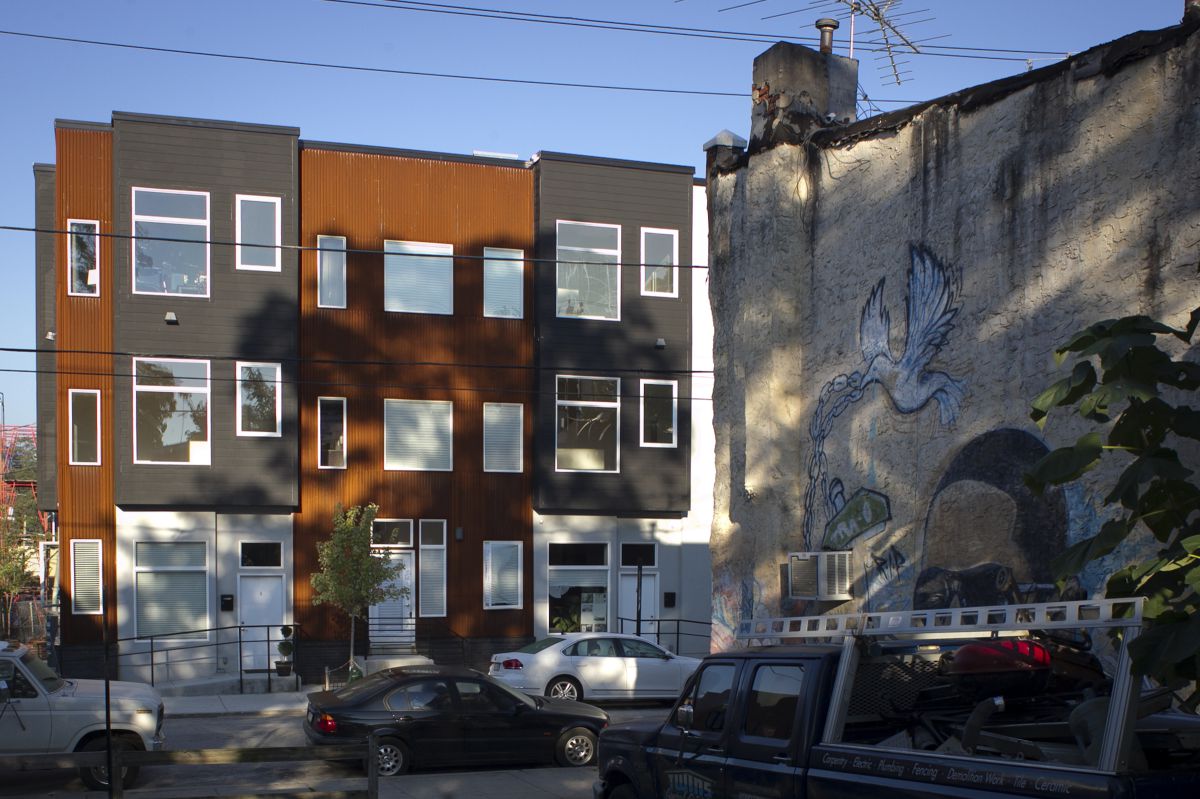
Taking a gander at a new report from demographers at the University of Virginia, we see that city centers are becoming younger, wealthier, and more educated. And it’s not just happening in “cool” cities like San Francisco. The same effect is at work in Charlotte, North Carolina. And while general population growth is still mostly occurring away from the central city, it’s happening at the extreme periphery of metro areas, leaving the modal suburban home the new locale for the poor and working class.
Stereotypes of metropolitan poverty are almost entirely framed by dense older neighborhoods with apartment buildings, housing projects, or row homes. That stereotype is now less accurate than it has ever been as inner-ring suburbs absorb a larger proportion of residents living below the poverty line.
These stereotypes are a product of the 70s, 80s, and first half of the 90s. Back then, America would watch from their TV screens as inner-city LA burned. Now we watch from our smartphones as suburbs like Ferguson, Missouri do the same.
HT Arnold Kling.

 Dry Hyphen Olympics